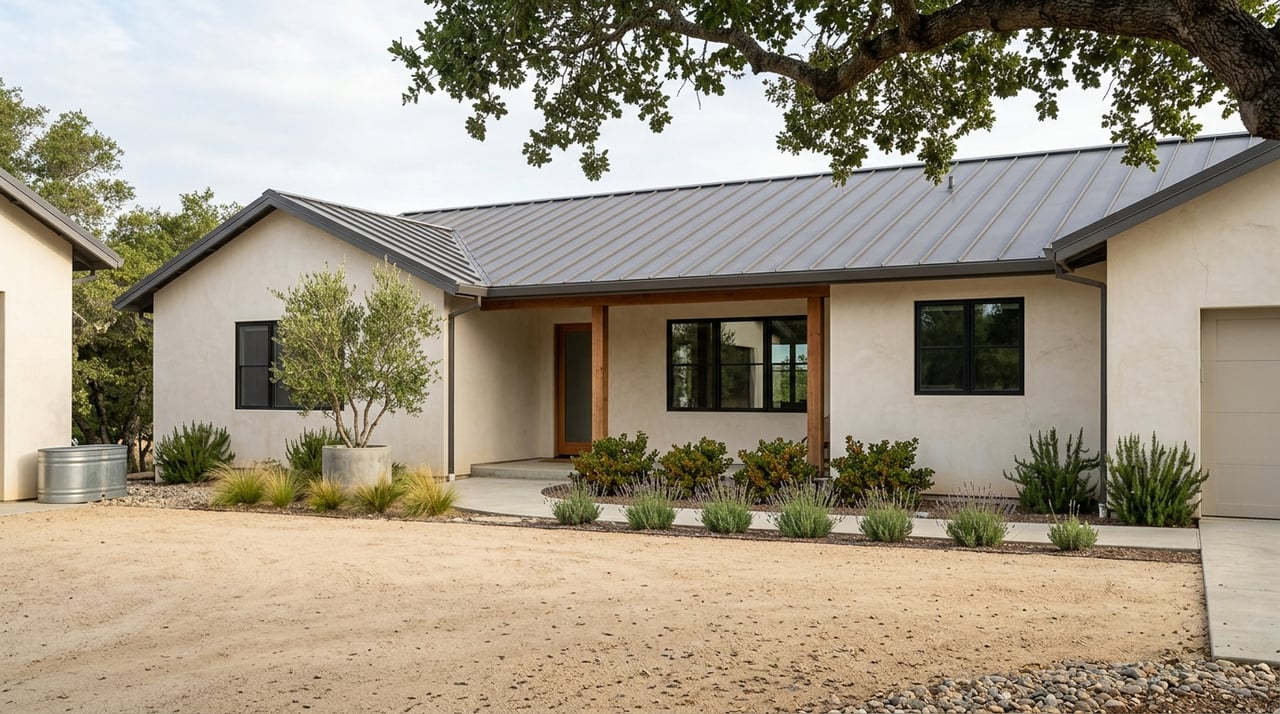
What To Know Before Buying Acreage Near Penngrove
May 21, 2026
May 21, 2026
Buying acreage near Penngrove can feel exciting right up until the questions start piling up. Can you build what you want, is the access legal, and will the property need septic, sewer, or a well? If you are looking for elbow room in Sonoma County, a little upfront due diligence can save you time, money, and stress. Here’s what to check before you buy so you can move forward with confidence.
With rural property, acreage alone does not tell the full story. In and around Penngrove, what matters most is where the parcel sits within Sonoma County’s service areas and what zoning applies to that specific APN.
Penngrove is one of Sonoma County’s Urban Service Areas, which marks the planned limit of urban development for the community. Inside and outside that footprint, parcels can fall into different zoning districts with different rules for use, density, and development. That means two properties on the same road may have very different possibilities.
If you are imagining a barn, hobby farm, workshop, or future guest structure, start with zoning. Sonoma County separates rural land into districts such as agricultural/resource and rural residential, and each district comes with its own permitted uses and development standards.
The practical takeaway is simple: do not assume a larger parcel automatically allows more flexibility. Before you write an offer, confirm the parcel’s zoning district and ask what that zoning allows today, not what a neighbor may be doing on another property.
Sonoma County guidance says agriculture can include crops and farm animals, and agricultural/resource zones explicitly address crop production and animal keeping. Certain storage buildings on parcels of five acres or more may also fall under an Agricultural Building Permit Exemption path.
That said, every use still needs to be checked against the parcel’s zoning and permit requirements. If your plans include stalls, equipment storage, or small-scale farming, verify the exact path with the county before you count on it.
One of the biggest surprises for acreage buyers is that utilities around Penngrove are mixed, not uniform. Some parcels may have access to public services, while others rely on onsite systems.
Sonoma Water says the Penngrove Sanitation Zone covers 475 acres and sends collected sewage to the City of Petaluma system for treatment. Sonoma Water also says the Penngrove Water Company serves the Penngrove Town District, including Canon Manor West. Outside those service areas, the utility picture can change quickly.
Before you move ahead, ask:
If a parcel is outside a sanitation district or zone, Permit Sonoma has an outside-service-area request and annexation process. For water, the serving provider must confirm the parcel is within its service area before issuing a will-serve letter.
For many rural Sonoma County properties, septic is normal. Permit Sonoma says homeowners outside public sewer service must have septic systems installed onsite, and the county’s 2024 septic study noted more than 36,000 local parcels with septic systems.
That does not mean every septic setup is equal. Site evaluations can involve soil profile work, percolation testing, and groundwater determinations, so a parcel-specific review matters.
If you are counting on drilling a new well, pause and verify current rules first. Permit Sonoma says non-emergency well permits are currently suspended, and the county requires a well construction permit for a new or replacement supply well, or for borings 15 feet or more below ground surface.
For buyers, this is a major timeline issue. If the property does not already have a functioning water source, you need to know whether the current permit environment works for your plans.
A beautiful parcel loses value fast if access is unclear. With acreage, you want to know whether access comes from a county road, a private road, or an easement-driven driveway, and whether that access is legally recorded.
Permit Sonoma says work in a public right-of-way, including driveway aprons and related improvements, requires an encroachment permit. The county also says a parcel must have legal access to a public road, or to an existing private road that connects to a public road, to be considered developable in lot line adjustment guidance.
Before closing, confirm:
These details are easy to overlook during a showing, but they can have a real effect on future use and cost.
Sonoma County’s parcel GIS can be a good planning tool, but the county says it is not survey-quality. It should not be used to interpret the true location of property lines.
That matters with acreage because fences, driveways, outbuildings, and even assumptions about usable land can be misleading. If boundaries are important to your plans, confirm them through county records and a licensed land surveyor.
Many buyers picture acreage as a blank slate, but site work often comes with its own approval path. Permit Sonoma says grading permits are required before many types of grading or related work, including driveways, building pads, site improvements, and reservoirs.
If your vision includes a new home site, expanded driveway, drainage improvements, or significant earthwork, those items should be part of your due diligence. In rural property, the land itself can shape both cost and timing.
If you hope to split land or rework parcel lines later, confirm that early. Sonoma County says a minor subdivision is a division of land into four or fewer parcels and is governed by the Subdivision Map Act and the county’s subdivision ordinance.
In other words, future flexibility is not something to guess at. If a potential split or lot line adjustment is part of your long-term plan, check the process before you buy.
Fire planning is part of acreage ownership in Sonoma County. The county’s defensible-space ordinance applies to improved parcels in unincorporated areas and also to unimproved parcels.
The ordinance requires at least 30 feet of defensible space around structures in the local responsibility area, with up to 100 feet depending on slope and fuel load. Agricultural crops and agricultural operations may be exempt in some cases, but defensible space is still required around habitable dwellings and accessory structures.
CAL FIRE’s fire hazard severity zone maps are based on fuel loading, slope, fire weather, and wind. That means wildfire risk should be reviewed for the specific parcel, not assumed from the general area.
If there is already a home on the property, ask what defensible-space work has been done. If the parcel is vacant, ask what clearing or ongoing vegetation management may be needed before building.
Rural buyers often focus on views, privacy, and use potential, but drainage and flood exposure matter too. FEMA’s Flood Map Service Center is the official online source for National Flood Insurance Program flood hazard information, and Sonoma County’s DFIRM layer shows local flood risk classifications.
A property may fall in an area tied to the 1-percent-annual-chance flood event, the 0.2-percent-annual-chance flood event, or an area of minimal flood risk. If a parcel has creek frontage, low-lying areas, or visible drainage channels, this review becomes even more important.
Buying acreage near Penngrove is often about lifestyle, but the purchase decision should stay grounded in facts. Zoning, service area, water, sewer, septic, access, grading, wildfire, and flood conditions all shape what you can actually do with the land.
That is why local guidance matters. A careful review before closing can help you avoid surprises and focus on properties that truly fit your goals.
If you are considering acreage near Penngrove and want a steady, local guide through the details, Ashley McSweeney can help you evaluate the property, ask the right questions, and move forward with confidence.
Stay up to date on the latest real estate trends.
Get assistance in determining current property value, crafting a competitive offer, writing and negotiating a contract, and much more. Contact me today.