Selling A Country Home Or Hobby Property In Penngrove
July 23, 2026
July 23, 2026
If you are selling a country home or hobby property in Penngrove, you already know it is not the same as selling a typical in-town house. Rural properties often come with more moving parts, from septic or sewer questions to well records, permits, access, and wildfire readiness. When you understand what buyers will look for before your home hits the market, you can reduce surprises and tell a much stronger story. Let’s dive in.
A Penngrove property can look simple from the street but be much more complex on paper. Parcel by parcel, key details can change, including sewer service, septic status, water setup, recorded improvements, and land-use history.
That matters because buyers of country homes and hobby properties usually look beyond the house itself. They want to understand how the land functions day to day, what improvements are documented, and whether the property file supports the lifestyle the listing promises.
In Penngrove, sewer should never be assumed based on the mailing address alone. Sonoma Water manages the Penngrove Sanitation Zone, and sewage from that zone is sent through a lift station to the City of Petaluma’s system for treatment, while nearby parcels outside service boundaries may still rely on septic.
Before you think about photos, pricing, or launch timing, pull the parcel record. Sonoma County’s Parcel Search is one of the best starting points because the Parcel Report compiles parcel information, county-issued permits, and public documents.
This early review can help you spot gaps before a buyer does. If an outbuilding, driveway improvement, utility trench, or grading work matters to the value of your property, you want to know what is documented and what may need closer review.
It is also smart to gather any records you already have at home. Old permit packets, surveys, lot line papers, easement records, septic paperwork, and contractor invoices can all help build a cleaner seller file.
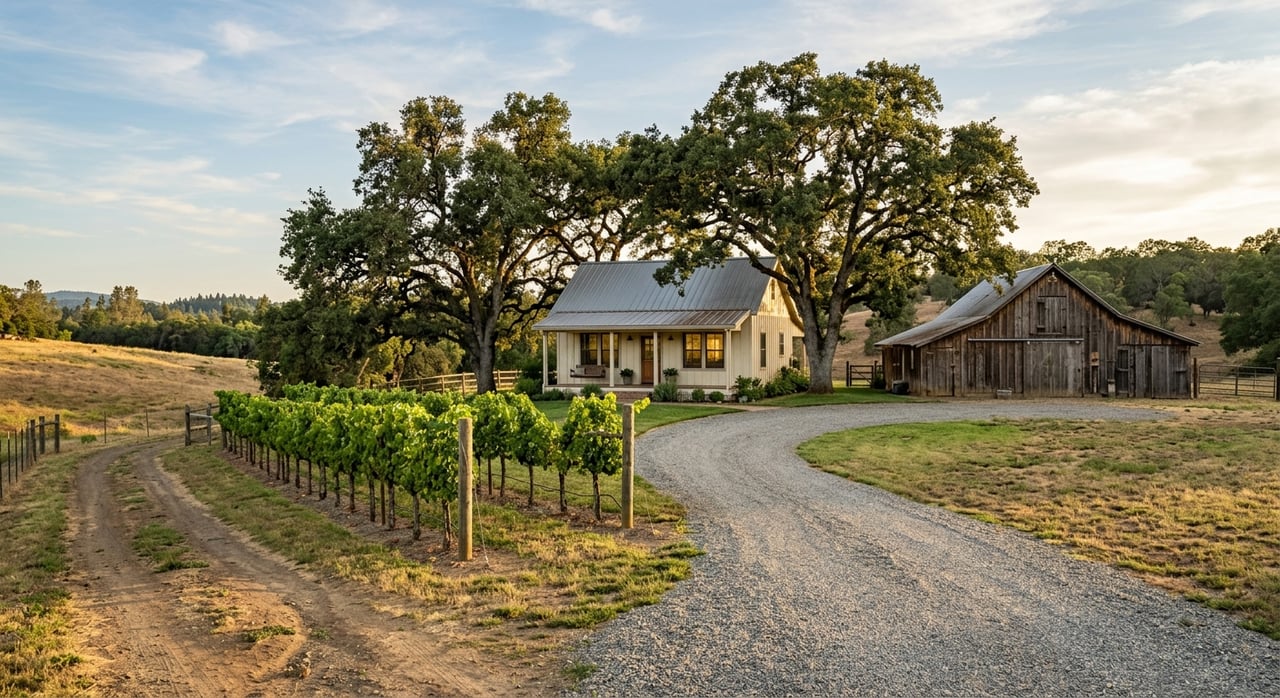
The best marketing for a Penngrove country home usually focuses on usable features, not just acreage totals. Buyers want to know how the land works for real life, whether that means room for gardening, fenced areas, outbuildings, parking, access, irrigation, or open ground that is practical to use.
That said, every claim should be accurate and supportable. If you plan to highlight barns, sheds, grading, vineyard rows, driveways, or other site improvements, the description should line up with the permit file, survey packet, or other available documentation.
This is especially important for hobby properties. If the parcel includes small-scale vines, farm-style improvements, or accessory structures, buyers will often want clear answers on what is permitted, what is accessory, and what site work has already been reviewed or recorded.
One of the first questions buyers tend to ask is simple: is the property on sewer or septic? In Penngrove, that answer can affect buyer interest, inspections, and negotiations.
If the parcel is outside sewer service and uses an onsite wastewater treatment system, your septic records become a major part of your prep. Sonoma County notes that where public sewer is not available, homeowners must have septic systems installed to treat wastewater from the home, and county OWTS data can show known septic parcels and septic permit history.
Useful records to gather include:
When buyers can review a more complete septic file, they usually feel more confident about maintenance expectations. That can make the escrow process smoother and reduce last-minute concern.
If your Penngrove property uses a private well, buyers may expect more than a quick verbal explanation. They often want documentation, service history, and recent water-quality information.
Sonoma County uses Groundwater Availability Areas for site-specific development analysis. If a parcel sits near a boundary, the county may apply the more restrictive water-availability area and may require special studies or proof of access to an off-parcel water source in some situations.
There is another local issue sellers should know. Permit Sonoma has stated that Sonoma County remains under a court order that prohibits non-emergency water well permits, which may affect any last-minute plans for optional well work before listing.
For peace of mind, many sellers also gather current water-quality information. EPA guidance for private well owners recommends annual testing for total coliform bacteria, nitrates, total dissolved solids, and pH, with more frequent testing if there are concerns.
Country properties often raise boundary and access questions that do not come up as often with tract homes. Fence lines, informal use areas, private roads, and old assumptions about property corners can all create confusion if they are not checked early.
Sonoma County says parcel mapping should be treated as a guide, not the legal boundary. Official parcel records should be confirmed with the Assessor, and a licensed land surveyor should be consulted before relying on a boundary description.
This is why it helps to gather:
If your property includes parcel-line changes from the past, those should be easy for a buyer to follow. Sonoma County handles lot line adjustments through formal county review, so complete records can help prevent delays.
On rural property, value is often tied to practical access. A usable driveway, drainage work, utility trenching, and roadside improvements may all matter to how a buyer sees the property.
If work was done near a county road or within the county right-of-way, documentation becomes important. Sonoma County requires encroachment permits for work in the county right-of-way, so sellers should gather any related permit records if those improvements are part of the property story.
This does not just help with disclosure. It also helps your marketing stay accurate, which builds buyer trust from the start.
In rural Sonoma County, wildfire exposure is a real part of how buyers evaluate a property. That makes fire readiness both a safety issue and a presentation issue.
Sonoma County parcels should be checked against CAL FIRE hazard maps. CAL FIRE says homes in State Responsibility Areas or in Very High Fire Hazard Severity Zones in Local Responsibility Areas must maintain 100 feet of defensible space by law.
Before photos and showings, focus on visible maintenance steps that signal care and preparation, such as:
These steps can improve first impressions while supporting wildfire safety. For many buyers, exterior upkeep is one of the clearest signs that a rural property has been thoughtfully maintained.
When buyers tour a Penngrove country home, they are often looking at two things at once. First, they are picturing the lifestyle. Second, they are quietly evaluating whether the property file will support that vision.
They tend to notice practical details such as whether the land appears usable, whether access looks straightforward, whether outbuildings seem well integrated, and whether the exterior shows ongoing care. They also notice when the seller seems organized and ready with answers.
That is why the strongest rural sales usually balance emotion with documentation. The property should feel appealing and aspirational, but the paper trail should be just as solid.
If you want a cleaner launch, start building your file before the home goes live. A focused prep period can make pricing, marketing, and buyer conversations much easier.
Here is a practical checklist to start with:
A country property sale can feel more complex, but it does not have to feel chaotic. With the right prep, you can present your Penngrove home with clarity and confidence.
Selling a rural property is often about more than square footage or curb appeal. It is about showing buyers that the land is useful, the improvements are understood, and the records back up the value. If you are preparing to sell in Penngrove and want a steady, local guide through the details, Ashley McSweeney can help you plan the right next steps.
Stay up to date on the latest real estate trends.

Get assistance in determining current property value, crafting a competitive offer, writing and negotiating a contract, and much more. Contact me today.