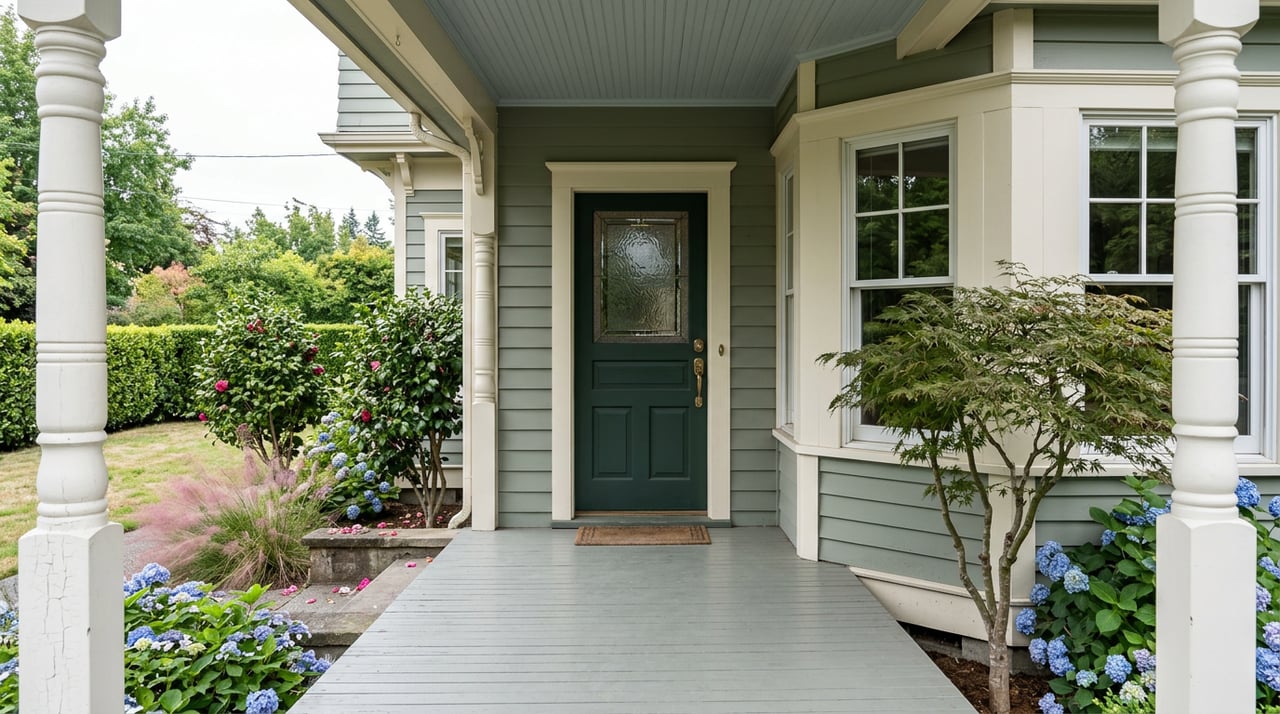
Petaluma's Historic Districts Don't Slow Renovations With Rules. They Slow Them With a Calendar.
September 10, 2026
September 10, 2026
"Almost all exterior work requires some level of discretionary review."
That's how the City of Petaluma describes what happens the moment your home sits inside one of its three historic districts. It reads like a footnote. It functions like a gate. And if you're buying, selling, or planning to renovate a period home in Petaluma, that one sentence changes the math on your timeline more than square footage or list price ever will.
Here's the part that surprises most buyers: the review process itself isn't the bottleneck. The paperwork is manageable. The standards are published. What actually adds months to a project is something far more mundane. The people who decide whether your porch rebuild or window swap gets approved only meet once a month.
Petaluma has designated three historic districts, and they don't behave the same way.
| District | Location | Character | Established |
|---|---|---|---|
| A Street Historic District | South and east of downtown | Residences, churches, and offices built between 1860 and 1925 | 1986, Ordinance 1666 N.C.S. |
| Oakhill-Brewster Historic District | Northwest of downtown | Mix of mansions and modest homes spanning the 1850s through the 1980s | 1990, Ordinance 1796 N.C.S. |
| Petaluma Historic Commercial District | Downtown core | 96 contributing commercial buildings on roughly 23 acres | Listed on the National Register in 1995; local design guidelines adopted in 1999, Ordinance 2097 N.C.S. |
If you're house hunting for a single-family home, A Street and Oakhill-Brewster are the two that matter most. The Commercial District is downtown storefronts and mixed-use buildings, a different animal with its own sign and facade rules. But the two residential districts share the same review structure, and that structure is what most buyers never think to ask about until they're already in escrow.
A standard building permit in Petaluma moves through staff review. You submit plans, staff checks them against code, you get approved, you build. For a home inside A Street or Oakhill-Brewster, that path only works for the smallest projects. Anything more substantial gets routed to the Historic and Cultural Preservation Committee, a five-member panel of Petaluma residents chosen for their knowledge of historic preservation, with at least two seats typically filled by people from fields like architecture or history. The committee reviews applications against the Secretary of the Interior's Standards for the Treatment of Historic Properties.
That committee meets the first Tuesday of every month.
Miss the submission window for that month's agenda and your project doesn't fail. It waits. A homeowner who assumes a summer renovation timeline the way they would in a non-historic neighborhood can find the actual bottleneck isn't design complexity or permit backlog. It's the fact that decisions only get made twelve times a year, and each one requires a Certificate of Appropriateness, sometimes bundled into what the city calls a Historic Site Plan and Architectural Review, before work can start.
There's a second trigger worth knowing if you're eyeing a teardown or a full rebuild. Any structure built before 1945 faces additional demolition review under the city's own demolition policy, regardless of whether the building has been formally landmarked. Petaluma defines demolition broadly too. Removing 50 percent or more of a building's exterior walls counts, which means an ambitious gut renovation can trip the same review as bulldozing the lot.
The review process isn't designed to block change. It's designed to shape it, and sometimes it shapes very large change.
In December 2020, the Petaluma City Council approved a major expansion of a Brainerd Jones-designed home at 26 6th Street, inside the A Street Historic District. According to a local preservation group's account of the approval, the project grew the home from 4,241 square feet to 9,464 square feet, more than doubling its size, while converting it from a six-bedroom layout to two bedrooms with an elevator added. The same account describes the project moving forward without a California Environmental Quality Act review that the group argued should have applied.
Whatever side of that specific dispute you land on, the takeaway for a buyer or seller is the same. Historic designation in Petaluma doesn't cap what you can do to a property. It adds a layer of process and public visibility around doing it. A project this size doesn't move quietly. It moves through public hearings, staff reports, and committee findings that anyone can read.
That kind of case isn't a one-time anomaly, either. The city's own planning applications page currently lists individual residential renovation and addition projects working through the review pipeline right alongside major multi-unit developments, evidence that this isn't a historical footnote from 2020 but an ongoing feature of owning and improving older Petaluma housing stock.
If you're a buyer with renovation plans, the practical move is to find out where your target property sits relative to the monthly meeting cycle before you write an offer contingent on a fast start date. Ask when the next Historic and Cultural Preservation Committee meeting falls and what the application deadline is for that agenda. A project that looks like a two-month job on paper can quietly become a five or six-month job simply because you missed one submission window and had to wait for the next.
If you're selling a home in A Street or Oakhill-Brewster, your buyer's lender, contractor, or architect may ask questions your standard disclosure paperwork doesn't cover. Having a record of any past Certificate of Appropriateness approvals, along with documentation of what work was done with review versus what predates the district's designation, can shorten your buyer's due diligence considerably. It also protects you. Unpermitted exterior alterations made outside this review process can surface as a problem for the next owner, not just the current one.
For both sides, the honest framing matters more than the paperwork. A charming, character-filled home in one of these districts is genuinely different to own than a similar-vintage home outside district boundaries. The difference isn't cosmetic. It's procedural, and it runs on a clock that doesn't speed up because you're motivated.
Does every old house in Petaluma go through this review? No. Only properties inside the three designated districts, or individually landmarked structures elsewhere in the city, trigger this level of discretionary review. A 1920s home outside those boundaries follows the standard permit path.
What if the house isn't individually famous, just old and inside the district line? It still counts. The district designation applies to the area, not just to standout architectural examples. Nearly all exterior work within A Street or Oakhill-Brewster boundaries needs some level of review, even for homes that aren't singled out as landmarks.
Does a historic designation affect property taxes? California's Mills Act law allows cities to offer participating owners of qualifying historic properties a property tax reduction in exchange for maintaining the building to preservation standards, and where those agreements exist they typically transfer to the next owner at sale. Whether a specific Petaluma property already carries one of these agreements is worth confirming directly with the city or the county assessor rather than assuming either way.
How far ahead should I plan if I want to renovate? Build in time for the monthly meeting cycle itself, not just the design and permitting work. If your project needs committee review, find out the submission deadline for the next agenda and work backward from there rather than forward from when you'd like to start.
Petaluma's historic districts are part of what makes its neighborhoods worth the premium buyers already pay for them. The Victorian stock on the west side and the century-old streets south of downtown aren't accidents of neglect. They're the result of a review process that's been in place for decades. Understanding how that process actually moves, on its own calendar rather than yours, is what separates a smooth purchase or sale from a frustrating one.
If you're weighing a historic Petaluma property, whether you're buying with renovation plans or preparing to list a longtime family home, Ashley McSweeney can walk you through what a specific property's history means for your timeline. Request a free home valuation and consultation to start with a clear picture instead of a guess.
Stay up to date on the latest real estate trends.
Get assistance in determining current property value, crafting a competitive offer, writing and negotiating a contract, and much more. Contact me today.